
Teaching High Frequency Words

High-Frequency Words: Supporting Fluency and Confidence in Struggling Readers High-frequency (HF) words are an essential component of literacy development. These words often appear frequently in texts but are phonetically irregular, making them more challenging for students to learn. For example, the word “come” is pronounced as “c-u-m,” which deviates from typical phonetic patterns. Helping students […]
Cloze Exercises For Literacy Development

The Importance of Cloze Exercises in Literacy Development Cloze Exercises are a powerful tool in literacy education, particularly when working with students who need structured, systematic support. These exercises not only enhance vocabulary but also develop contextual understanding, encouraging students to think critically about word choices in a sentence. This skill is fundamental for improving […]
Using Structured Reading Sheets

The Importance of Reading Sheets and Practice in Literacy Development Reading fluency and accuracy are the cornerstone skills of literacy, and they form the foundation for success in all areas of education. Many students, especially those struggling with literacy, benefit from systematic, targeted practice aligned with their current skill level. When a student is not […]
Teaching Tracking And Blending

Moving from reading sounds to reading words Phonics is about learning the sounds of English and mapping those sounds onto the letters we use to spell them. If you observe students learning to read, you will notice a few common early reading stages they go through. Stage 1 Phonemic awareness: Students start to develop the […]
A Guide To Teaching Handwriting

How to Use the Literacy Support Kit (LSK) Handrwiting Resources Why Handwriting Is Important Handwriting mastery is crucial for developing kids’ confidence and kinaesthetic memory, freeing up working memory, and enabling students to focus better on spelling. Handwriting is public, and it can become a source of humiliation for kids who struggle with it. Often, […]
Teaching The Alphabet – Guide

How to Use the Literacy Support Kit (LSK) Alphabet Resources Introducing the alphabet early while explicitly teaching phonemes one by one has multiple purposes and is grounded in research about how children learn to read and write. Early Familiarity with Symbols Teaching the alphabet gives kids an immediate sense of the symbols they will encounter […]
Free Webinar – Word Cracking Demonstration

Unlock Literacy Success: Replay of the Word Cracker Webinar on new features and Literacy Intervention. We are thrilled to offer you the opportunity to watch the replay of our recent webinar, where we delved into the extensive features and functionalities of Word Cracker, an essential tool for enhancing literacy through morphological intervention. Hosted by Bill […]
-ic Endings Add ‘k’ Rule
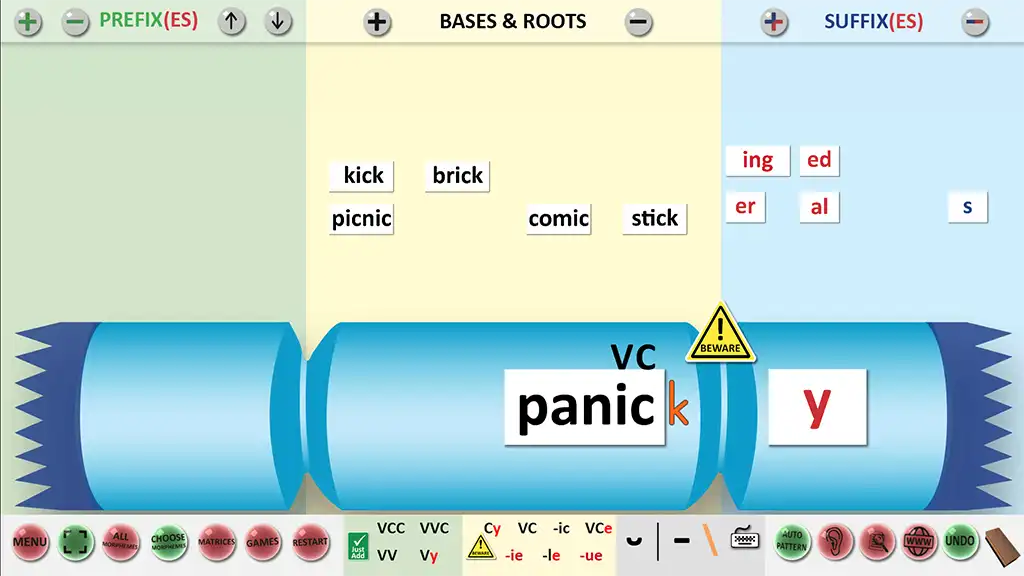
This is a tricky spelling rule because you need to be familiar with a number of rules for it to make sense. When words end with -ic, and we add a vowel suffix that begins with e, i or y, we need to add a k. e.g. panic+ing becomes panicking. Preceding this, we recommend kids […]
St Peter’s Woodlands And Word Cracking

Why 96% of St Peters Woodlands year-one students perform at, or above, literacy benchmarks! Watch the Video and read on to discover exactly how St Peter’s Woodlands Grammar School transformed their literacy education by embedding the science of reading across the whole school, using explicit direct instruction principles and Word Cracker morphology resources and tools. […]
Word Cracking terminology
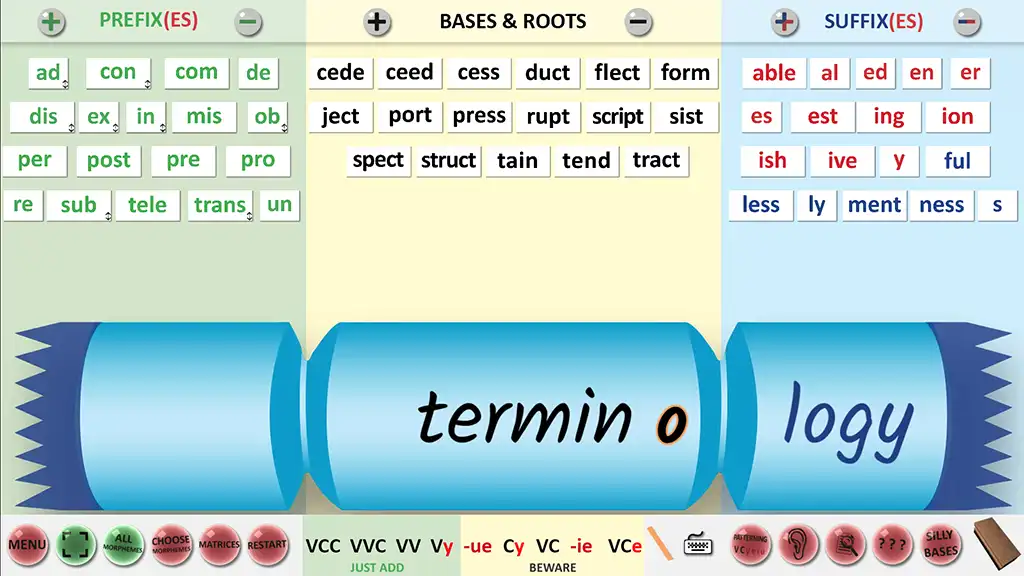
Defining the common terms you’ll see in the Word Cracking Resources In this article, we glossarise the common morphological terms you will see in the Word Cracker manual, other blog posts and videos and on the Online Word Cracker. Before we dive in, we had better explain (for newbie word nerds) why we bother teaching […]